
Key Takeaways from
Behavioral Health Tech 2025
Detail page
By Geoffrey Melada | Nov. 18, 2025
The Meadows Institute was proud to serve as the premier policy partner for Behavioral Health Tech 2025, the nation’s largest conference dedicated to expanding access to mental health care through technology, health equity and innovation.
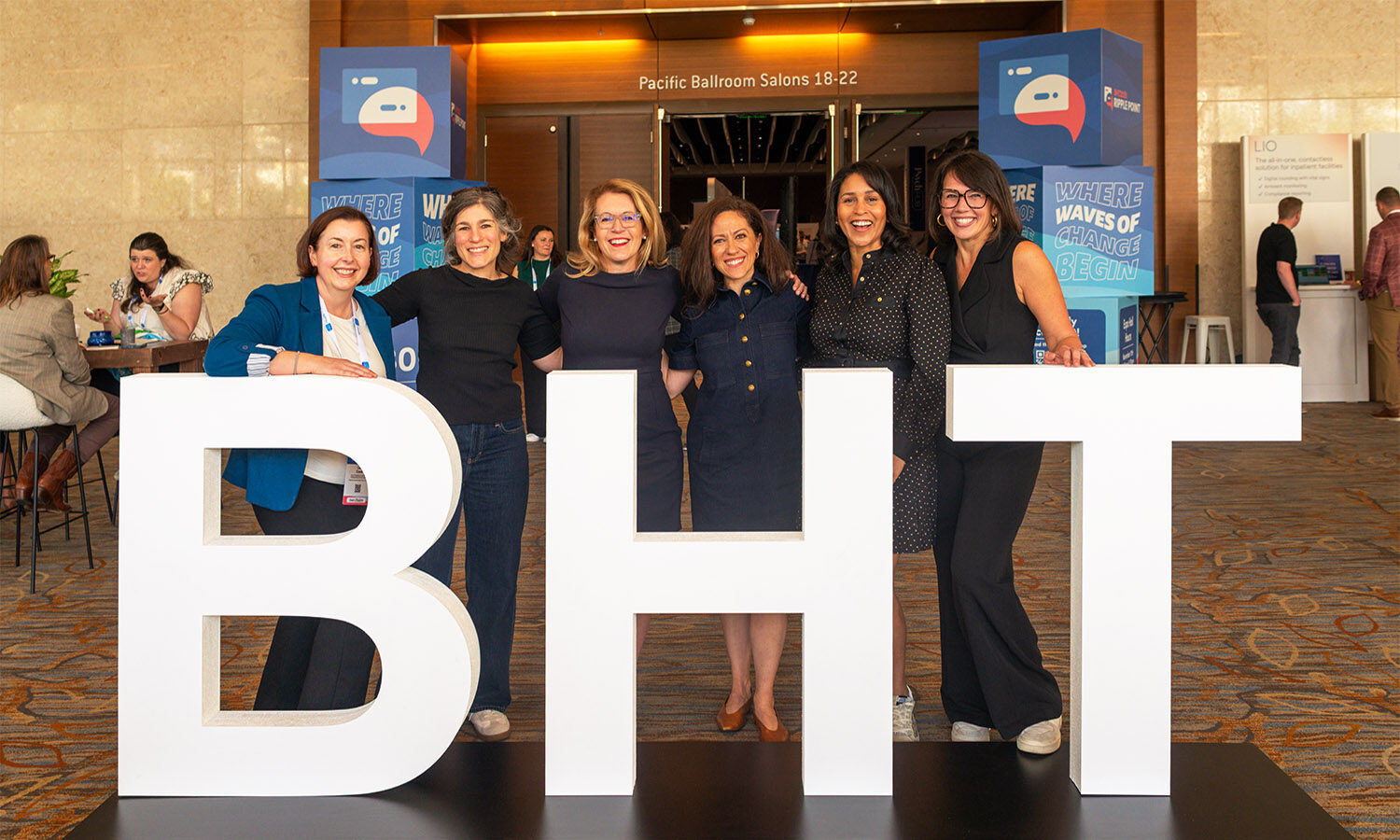
Leaders from the Meadows Institute traveled to San Diego in November to share their expertise in mental health innovation and policy with a diverse audience of health systems, behavioral health providers, health plans, investors, startups, and policymakers.
Chief Innovation Officer Kacie Kelly, Chief Policy Officer John Snook and Senior Vice President for Health System Integration Clare McNutt participated in four panel discussions and fireside chats at the conference among them, appearing as moderators and featured speakers.
Here are five top takeaways from those conversations:
1. Measurement-informed care has the momentum.
Measurement-informed care was the mantra of the day at Behavioral Health Tech 2025. Kacie Kelly, appearing on a panel titled “Measure Up! Why Policy Must Drive Measurement-Based Care,” said that behavioral health finds itself at “an inflection point, where we’re starting to see some unification and momentum on the need to implement measurement-informed care.” Panelist Cynthia Grant, head of clinical excellence at Grow Therapy, agreed. “Our profession deserves this level of accountability,” she said, predicting that measurement-informed care would eventually become so “ingrained into education and the process of how we do this work” that its use becomes second nature, “like wearing a seatbelt.”
2. Measure the whole person.
Clare McNutt continued the conversation on measurement-informed care when she moderated a panel titled “Measure What Matters.” McNutt began by acknowledging the growing consensus that measurement “is the right thing to do,” but questioned whether there is agreement about what to measure. “Quality is important, but are we measuring the right things?” asked Dr. Sara Johansen, a psychiatrist and founder of Stanford University’s Digital Mental Health Clinic. Johansen said she looks to “functional outcomes,” not just psychological ones to see if her patients are improving. “We need to capture more data about what happens in-between sessions,” she stressed, “to widen the aperture and capture all the things patients care about when getting better – to see the whole context of the patient as person.”
3. AI is more than just chatbots.
AI was another trending topic at the conference, echoing the theme of the Meadows Institute’s recent Bright Spots convening in Washington, D.C. During a fireside chat hosted by John Snook, Christina Silcox, research director for digital health at the Duke-Margolis Institute for Health Policy, noted that people are especially concerned about the rise of AI due to headlines about AI-assisted therapy bots feeding delusions or encouraging suicide due to what she called “sycophancy,” the tendency of large language models to agree with users. But those valid concerns are balanced by “a lot of excitement” about the potential of AI-powered mental health tools to increase access. Silcox called for a “shared vision of what health care will look like in the world of AI” to ensure that as policy is being developed, “we’re building incentives toward that vision, and not hindering that vision.”
4. Don’t leave mental health out of health tech innovation (again).
During his fireside chat, Snook noted that the broader health care industry lauds AI for its potential for investment and opportunity. But when it comes to behavioral health specifically, the conversation shifts to risk prevention and the possibility of harm. Snook told conferencegoers it would be a mistake for behavioral health to wall itself off from the rest of health care to such an extent that the space becomes uninvestable. Kelly was optimistic. “We’re seeing a renewed interest in D.C. in health tech. It’s looking like this administration is very interested in investing in the health tech infrastructure. We want mental health to have the first seat at the table.”
5. “You are doomed if you are not thinking about policy.”
Appearing on a panel titled “Eye on the Prize – Leading Through Headwinds and Tailwinds to Advance Outcomes, Boost Profitability, and Secure Your Bottom Line,” Kelly said that in a world of increasing uncertainty, “policy foresight” is essential to helping behavioral health entrepreneurs understand what is on the horizon. Dr. Frank Webster, chief medical officer for behavioral health at Health Care Service Corporation, put it even more bluntly: “You are doomed if you are not thinking about policy.” Kelly advised entrepreneurs to start thinking about “policy as a growth lever, and not just a compliance issue.” Speaking from the main stage, she unveiled a new offering from the Meadows Institute, HeadsUp, a federal policy advisory created specifically for investors and entrepreneurs advancing innovations in the mental health, brain health, and neurotech sectors, which she said is designed to help budding companies “get smarter on the policy landscape we all need to operate in.” Visit https://mmhpi.org/headsup/ or email headsup@mmhpi.org to learn more.